An 8-Day Self-Drive Safari: Serengeti and Ngorongoro by 4×4, Camping All the Way
This page from Car Rental Arusha outlines an 8-day self-drive safari itinerary through Tanzania’s Northern Circuit, using a rented 4×4 Land Cruiser equipped with a rooftop tent for camping. The route runs Arusha → Lake Manyara → Ngorongoro Highlands → Serengeti (Seronera, then Western Corridor/Northern/Ndutu depending on season) → Ngorongoro Crater → back to Arusha, covering roughly 900–1,100 km of mostly dirt roads. It emphasizes unguided game drives, basic public campsites without fences, wildlife encounters (lions, elephants, migration crossings, rhino), and the self-reliance of navigating, cooking, and camping independently, positioning self-drive as a rugged, budget-friendly alternative to guided tours.
Day 1: Arusha to Lake Manyara
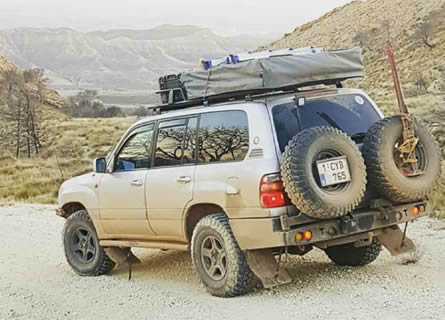
The safari begins in Arusha, northern Tanzania’s gateway town, where the Land Cruiser is collected from a rental yard on the outskirts. It’s a well-used but mechanically sound 4×4 — roof hatch popped open for game viewing, two spare tyres bolted to the back, a rooftop tent or ground tent packed alongside a fridge box, jerry cans of diesel and water, and a folder of park permits already arranged through the rental company. Before leaving town, a stop at one of the supermarkets on Sokoine Road fills the cool box with meat, vegetables, and charcoal for the week ahead.
The drive out of Arusha runs southwest on the tarred road toward Mto wa Mbu, with Mount Meru receding in the rearview mirror and the Rift Valley escarpment rising ahead. By early afternoon the entrance gate to Lake Manyara National Park comes into view. The park is compact but dense — groundwater forest gives way to open floodplain along the alkaline lake, and within the first hour there are baboon troops crossing the track, hippos wallowing just off the road, and often the park’s famous tree-climbing lions draped over acacia branches.
The night is spent at Manyara’s public campsite, a simple, unfenced site with long-drop or basic flush toilets, cold showers, and a covered cooking shelter. Camping here is elemental: the tent goes up before dusk, dinner is cooked over charcoal, and once the fire dies down the sounds of the bush take over — hyena whoops, the occasional elephant rumble, and the constant hum of insects.
Day 2: Onward to the Serengeti via the Ngorongoro Highlands
The second day is a long driving day, and the odometer earns its keep. Leaving Manyara, the road climbs steeply onto the Ngorongoro Highlands, the tarmac ending and red volcanic soil taking over. Coffee and banana plantations line the route through Karatu before the road enters Ngorongoro Conservation Area itself, climbing through montane forest thick with mist and, often, elephant.
At Heroes’ Point on the crater rim, the vehicle stops for the first proper view down into Ngorongoro Crater — a vast green bowl 600 metres below, dotted with what look like grains of rice that are, on closer inspection, wildebeest and zebra herds. From here the track descends the outer slopes of the highlands and drops onto the short-grass plains of the eastern Serengeti, passing through Naabi Hill Gate, where park fees for the Serengeti are settled and the paperwork checked.
The change in landscape past the gate is immediate: the highlands give way to the endless horizon the Serengeti is named for — “siringet,” the Maasai word for endless plains. Depending on the season, this stretch can mean driving straight into the heart of the wildebeest migration, with columns of animals stretching to the horizon in every direction. The day ends at one of the public campsites near Seronera, in the central Serengeti, arriving just as the light goes gold and the resident lion prides start to stir.
Days 3–4: Central Serengeti (Seronera)
Two full days are spent based at Seronera, using the campsite as a hub for game drives radiating outward. This is prime territory for lion sightings — the Seronera river valley is famous for its density of resident prides — and also good ground for leopard, which favour the sausage trees and rocky kopjes scattered across the plains. Early mornings are the best time to drive, leaving camp at first light while the air is still cool and predators are most active, then returning to camp for lunch during the heat of the day when most animals rest.
Self-driving here means constant navigation by GPS and paper map, since the Serengeti’s dirt track network is a maze without signposts. It also means total self-sufficiency — no guide radioing in sightings, so game viewing is a matter of reading the landscape: watching for vultures circling, slowing at water crossings, checking the kopjes for shapes that don’t quite belong. The reward is unhurried time at sightings, with no other vehicles dictating when to move on.
The campsites in this area are basic public sites — a long-drop toilet block, sometimes a cold shower, and absolutely no fence. Elephants and hyena regularly wander through camp at night, and buffalo graze metres from the tents by morning. Cooking is done on a small gas stove or over coals, with food locked away in the vehicle overnight and headlamps used sparingly to avoid drawing attention. It’s not glamorous, but it puts the traveller inside the ecosystem rather than observing it from behind glass.
Day 5: Western Corridor or Northern Serengeti (season-dependent)
Depending on the time of year and where the migration is concentrated, day five is spent either pushing west toward the Grumeti River, where crocodiles wait for wildebeest crossings between roughly May and July, or driving north toward the Mara River, where the most dramatic river crossings happen between July and October. Outside those windows, the itinerary instead stays central or shifts toward the southern plains around Ndutu, which come alive with calving herds between December and March.
Wherever the route leads, this is typically the longest driving day of the trip, covering rough, dusty tracks that can take four to five hours to cross even relatively short distances. The Land Cruiser earns its reputation here — deep sand near riverbeds, black-cotton mud after rain, and washboard corrugations all demand low-range gearing and a careful hand on the wheel. A puncture or two is not unusual, and changing a tyre in 35-degree heat with vultures circling overhead becomes a genuine bonding moment with the vehicle.
Camping this night is at a satellite public campsite closer to whichever region was the day’s destination — quieter and more remote than Seronera, often with just one or two other vehicles sharing the site.
Day 6: Back Toward Ngorongoro
The sixth day retraces the route east, back across the plains toward Naabi Hill Gate and out of the Serengeti. There’s time for one last unhurried game drive through the short-grass plains before exiting — this stretch often holds cheetah, which favour the open visibility for hunting, along with the huge mixed herds of zebra and wildebeest that make the plains famous.
Climbing back up into the Ngorongoro Highlands in the late afternoon brings a noticeable drop in temperature and a change in vegetation back to montane forest. The night’s camp is on the crater rim itself, at one of the public sites perched on the edge of the caldera. This is, without exaggeration, one of the coldest camping nights of the trip — altitude here is over 2,200 metres, and warm layers and a good sleeping bag matter. In exchange, campers get a sunset over the crater floor and, often, elephant grazing near the campsite fence line after dark.
Day 7: Ngorongoro Crater
The crater itself is the trip’s set piece. A steep, switchback descent road drops the Land Cruiser onto the crater floor at dawn, into what is effectively a self-contained ecosystem 20 kilometres across, walled in by the crater rim on all sides. Because the crater concentrates such a density of wildlife into so small an area, this is often the best single day of game viewing on the whole trip: lion prides that rarely need to move far, the crater’s famous population of black rhino, dense herds of buffalo, and flamingo-lined soda lakes.
Self-driving the crater floor requires discipline — only a limited network of tracks is open to vehicles, and rangers enforce a strict exit time in the afternoon since overnight camping on the crater floor is not permitted. By early afternoon, the Land Cruiser climbs back out via the ascent road, and the vehicle returns either to the rim campsite for one more cold, high-altitude night, or descends toward Karatu for a final night closer to civilization.
Day 8: Return to Arusha
The final day is a return drive down through the highlands, back through Karatu and Mto wa Mbu, and along the tarred road to Arusha. There’s usually time for a stop at a curio market or coffee farm en route. By the time the Land Cruiser is handed back — caked in red dust, tyres worn, roof tent smelling faintly of woodsmoke — the odometer will show somewhere in the region of 900 to 1,100 kilometres covered, almost all of it on dirt.
What stays with most people afterward isn’t any single sighting, but the rhythm of the week itself: the total self-reliance of navigating, cooking, and camping without a guide; the particular quality of silence at a bush campsite after the fire dies; and the sense, driving those last kilometres into Arusha, of having actually crossed the landscape rather than simply visited it.