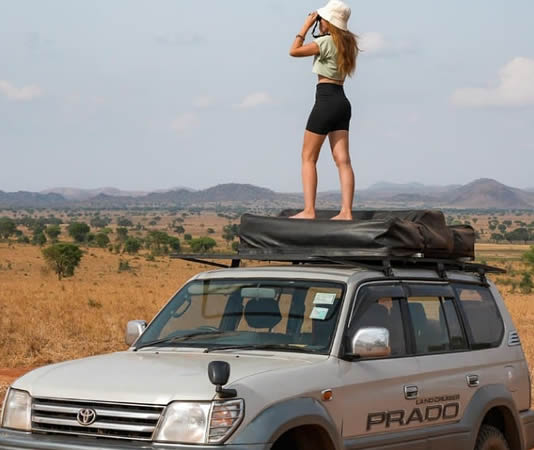
8-Day Self-Drive Safari: Arusha – Lake Manyara – Ngorongoro Crater – Serengeti – Arusha
This is a classic northern-circuit route, well suited to self-driving since the roads between parks are well marked and distances are manageable. You’ll need a 4×4 (a Toyota Land Cruiser or similar, ideally with a pop-up roof for game viewing) and should book park permits and lodges in advance, especially for Ngorongoro Crater and Serengeti during peak season (June–October, and January–March for the calving season).
Day 1: Arusha to Lake Manyara National Park
Pick up your 4×4 rental in Arusha in the morning (allow time for a thorough vehicle check — brakes, spare tyre, jack, and radio/phone reception plan, since parts of the route have patchy signal). Drive southwest on the sealed Arusha–Manyara road, roughly 1.5–2 hours (about 125 km) via Mto wa Mbu, a lively market town where you can pick up fruit, snacks, and a SIM card top-up before entering the park.
Lake Manyara is compact but rewarding, known for its groundwater forest, tree-climbing lions, large elephant herds, and vast flocks of flamingos along the alkaline lake shore when water levels are right. Spend the afternoon on a game drive inside the park after checking in.
Where to stay (mid-range options):
- Kirurumu Manyara Lodge – tented camp on the Rift Valley escarpment with excellent views over the lake.
- Lake Manyara Serena Safari Lodge – circular thatched bandas overlooking the Rift Valley, comfortable and well located.
- Manyara Wildlife Safari Camp – solid mid-range tented option close to the park gate.
Day 2: Lake Manyara – Full Day Game Drive, then on to Karatu
Spend the morning on a further game drive inside Lake Manyara if you didn’t cover the whole park the day before, particularly the hippo pools and the birding areas near the lake shore. By early afternoon, exit the park and drive up the escarpment towards Karatu (about 30–45 minutes), the small town that serves as the gateway to Ngorongoro Conservation Area.
Karatu is a sensible overnight stop before tackling the crater, since it sits much closer to the Ngorongoro gate than Manyara does, and lodges here are noticeably better value than those inside the conservation area itself. Use the afternoon to relax, restock supplies, and perhaps visit a local coffee farm — the Karatu area is a coffee-growing region and several farms offer short tours.
Where to stay (mid-range options):
- Ngorongoro Farm House – set among coffee and banana plantations, spacious cottages, popular with self-drivers.
- Octagon Safari Lodge – simple, comfortable, good value, close to the highway.
- Kitela Lodge – slightly more upscale but still mid-range, set on a former coffee estate.
Day 3: Karatu to Ngorongoro Crater
Drive up to the Ngorongoro Conservation Area gate (around 20–30 minutes from Karatu), pay your park fees, and continue along the crater rim road. The crater descent road is steep and can be muddy after rain, so take it slowly and in low gear. Spend the whole day on a game drive on the crater floor — this is one of the most reliable wildlife viewing areas in Africa, with dense concentrations of lion, elephant, buffalo, hippo, zebra, wildebeest, and one of the better chances anywhere of spotting black rhino.
Note that self-drive vehicles are permitted on the crater floor, but you’ll need to arrange a compulsory local guide at the gate (this can usually be organized on the spot). Exit the crater floor by the required time (there are strict closing times) and drive back up to your lodge on the rim.
Where to stay (mid-range options):
- Rhino Lodge – one of the more affordable options actually on the crater rim, simple rooms with crater-adjacent access.
- Ngorongoro Wildlife Lodge – rim-edge location with partial crater views, comfortable rooms.
- Manor at Ngorongoro – slightly further out but well-appointed, farmhouse-style rooms (a good alternative if rim lodges are full or over budget).
Day 4: Ngorongoro to Central Serengeti (Seronera)
This is the longest driving day of the trip. From the crater rim, continue along the Conservation Area road towards Naabi Hill Gate, the entrance to Serengeti National Park (roughly 2–3 hours from the crater). The road is a mix of tarmac and graded dirt, and the scenery changes dramatically as you descend onto the open Serengeti plains — keep an eye out for wildebeest and zebra herds along the way, especially near Naabi Hill itself.
From Naabi Hill, continue to the Seronera area in central Serengeti (another 1.5–2 hours), stopping for game viewing en route since this stretch often has good sightings of lion and cheetah on the open grassland. Check in to your lodge by mid-to-late afternoon and, if time allows, head out for a short evening game drive near camp.
Where to stay (mid-range options):
- Serengeti Serena Safari Lodge – Maasai-inspired architecture, central Seronera location, reliable choice.
- Seronera Wildlife Lodge – built into a kopje (rock outcrop), atmospheric and centrally located, though rooms are simpler.
- Ndutu Safari Lodge (if visiting Dec–March for calving season) – further south, unfenced camp with excellent access to migration herds during that period.
Day 5: Central Serengeti – Full Day Game Drive
Dedicate this full day to exploring the Seronera Valley, the heart of the Serengeti and one of the best year-round game viewing areas in the park thanks to its permanent river system. This is prime territory for leopard sightings (look up into sausage trees and along riverine woodland), as well as lion prides, hippos in the Seronera River, and large herds of buffalo and giraffe.
Head out early for the best light and animal activity, take a picnic lunch (most lodges will prepare one), and continue game viewing into the afternoon. Depending on the time of year, you may also intersect with the Great Migration herds if they’re passing through central Serengeti (roughly April–May and November, as they move between the south and north).
Stay another night at the same lodge as Day 4.
Day 6: Serengeti – Northern Serengeti or Western Corridor (seasonal option)
This day can be tailored to the season:
- June–October: drive north towards the Mara River area to catch the migration’s river crossings — a long day trip (2–3 hours each way from Seronera), so leave early.
- Other months: explore the Western Corridor along the Grumeti River, known for resident hippo and crocodile populations, or simply spend a second relaxed day around Seronera, visiting different drainage lines you missed on Day 5.
Return to your Seronera lodge for the night, or if you’ve pushed further north, consider an overnight in that area instead (see lodge note below) to avoid backtracking.
Additional mid-range option if overnighting further north:
- Serengeti Serena Kirawira-area or Kati Kati Tented Camps – mobile tented camps that reposition seasonally to stay near the migration, generally booked through operators but accessible if self-driving to their set location.
Day 7: Serengeti to Ngorongoro Highlands / Karatu (return leg begins)
Start the drive back out of the park via Naabi Hill Gate and the Ngorongoro Conservation Area, retracing the route from Day 4 in reverse. Depending on your pace, you can either drive straight through to Karatu (about 4–5 hours total from Seronera) or break the drive with a final game viewing stop along the crater highlands or a visit to an Iraqw or Maasai cultural site near Karatu, such as the Gibb’s Farm cultural walk area.
Overnight again in Karatu, which sets you up for a manageable final drive back to Arusha the next day rather than a long, tiring push in one go.
Where to stay: any of the Day 2 options work well here again — Ngorongoro Farm House, Octagon Safari Lodge, or Kitela Lodge.
Day 8: Karatu to Arusha
Depart Karatu in the morning for the drive back to Arusha (about 2.5–3 hours on the sealed road via Mto wa Mbu), allowing time for a stop at a curio market or coffee shop en route if you’d like some last-minute souvenirs. Arrive in Arusha by early-to-mid afternoon, giving yourself buffer time to return the vehicle, deal with any paperwork, and catch onward flights if departing the same day.
Practical Notes
- Permits: Park fees for Lake Manyara, Ngorongoro, and Serengeti are charged per 24-hour period and must be paid in advance or on arrival via approved payment methods (often a Tanzania Tourism payment card system) — check current requirements before you go, as this changes periodically.
- Roads: Expect tarmac from Arusha to Karatu, then graded dirt roads from Ngorongoro through the Serengeti; a 4×4 with good clearance is essential, and driving after dark inside the parks is prohibited.
- Fuel: Fill up in Arusha and Karatu — fuel is not reliably available inside the parks.
- Guides: While self-driving, hiring a local guide for the Ngorongoro Crater floor (arranged at the gate) is compulsory and well worth it for wildlife spotting.