
A Trusted Choice for Self-Drive Safaris in Tanzania
4×4 Land Cruiser – Dar es Salaam
A 4×4 Land Cruiser with a quality rooftop tent is one of the most capable and authentic ways to explore Tanzania. We provide deliveries to Dar es Salaam — giving you the freedom to camp wherever the view is best, the reliability of a proven vehicle in remote conditions, and access to places luxury lodges can’t reach. From the misty Uluguru peaks to the floodplains of Mikumi, the forests of Pugu Hills, and the beach wilderness of Saadani, the self drive adventure starts on your own terms.
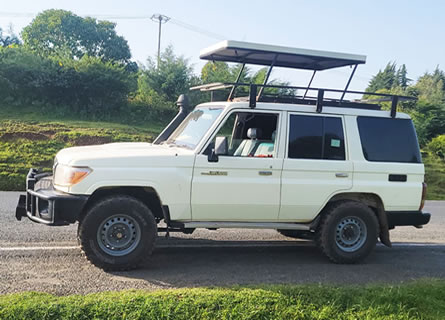
The Land Cruiser stands out as one of the best 4×4 vehicles for self-drive safaris in Tanzania and throughout Africa. Its widespread use across the continent has made it a familiar and trusted vehicle among locals, guides, and mechanics alike. Should a breakdown occur, repairs are rarely a challenge, as spare parts and skilled mechanics are readily available in even the most remote areas. Regardless of the specific model, any Toyota Land Cruiser is a reliable and worthy choice for a safari adventure in Tanzania.
From $120
Dar es Salaam sits at the gateway to some of East Africa’s most spectacular landscapes — from turquoise Indian Ocean shores to the dramatic Uluguru escarpments. A well-equipped 4×4 Land Cruiser topped with a quality rooftop tent (RTT) is the gold standard for exploring this terrain: reliable, off-road capable, and paired with a comfortable, elevated sleeping solution that keeps you off the ground and away from wildlife, insects, and moisture.
This guide covers vehicle selection, tent types, gear, campsites, safety, regulations, and seasonal planning.
Why the Toyota Land Cruiser
The Land Cruiser is an institution on African roads — repairable with basic tools, with spare parts available in virtually every Tanzanian town, and trusted for decades by governments, NGOs, and adventurers.
Best Models for Camping in Tanzania
| Model | Strengths |
|---|---|
| 70 Series (LC70) | No-frills workhorse; body-on-frame, coil-spring front suspension, strong payload capacity for gear, water, and fuel |
| 76 Series (Station Wagon) | Most versatile — 70 Series ruggedness with more interior space; 4.2L diesel or 4.5L turbodiesel V8 for climbing and sand |
| 100 & 200 Series | Independent front suspension, luxury interiors, off-road electronics; popular for families; 200 Series can carry heavy hard-shell tents |
Key Advantages
- Reliability — built for remote conditions where breakdowns can be dangerous
- Spare parts — stocked in every major town
- Ground clearance — handles flooded roads, rocky trails, deep sand
- Roof load rating — most models: 100–150 kg dynamic, 300+ kg static
- Diesel economy — lower running costs on long journeys
- Aftermarket ecosystem — bull bars, lift kits, roof racks, recovery gear widely available
Rooftop Tents: Choosing the Right One
Tanzania’s climate ranges from hot, humid coastline to cool, dry highlands — tent choice matters.
Soft-Shell vs Hard-Shell
Soft-Shell
- Folds flat; opens in 2–5 minutes
- Built-in mattress (60–100mm foam), canvas/polyester walls, multiple windows
- Pros: Lightweight (40–70 kg), affordable, good ventilation
- Cons: Wind noise at speed, slower setup
- Best for: Budget-conscious or infrequent campers, max sleeping space
Hard-Shell
- Fibreglass, aluminium, or ABS shell; pops up in seconds
- Pros: Fast setup (under 60s), aerodynamic, better insulation (useful at altitude near Kilimanjaro or Ngorongoro)
- Cons: Heavier (70–120 kg), pricier, smaller footprint in clamshell designs
Best for: Frequent campers, long-distance travel between sites
Top Brands in East Africa
- Autohome (Italy) — premium hard-shell, used by professional safari operators
- ARB Simpson III — robust, widely available, strong rain performance
- Eezi-Awn (South Africa) — built specifically for African conditions
- Bundutec (South Africa) — hard-shell with fold-out extensions
- Local Tanzanian fabricators — custom canvas-over-frame, lower cost
Must-Have Features for Tanzania’s Climate
- 280g+ ripstop polycotton canvas (breathable, handles humidity and cold)
- Full-coverage rainfly (two rainy seasons make this non-negotiable)
- No-see-um mosquito mesh (malaria risk on the coast)
- 60–75mm high-density foam mattress
- Integrated awning or attachment points for shade
Roof Racks, Mounting & Vehicle Prep
Choosing a Roof Rack
- Steel vs aluminium — steel is stronger and field-repairable by welding; aluminium is lighter and rust-proof
- Load rating — exceed the tent’s weight by at least 50% for rough-road dynamic loads
- Gutter vs through-roof mounts — through-roof is stronger; get custom fitting from a Dar es Salaam fabricator
- Basket rack vs flat platform — basket racks add gear storage; flat platforms give a cleaner mount
Vehicle Prep for Trips from Dar es Salaam
- 2-inch suspension lift to offset tent weight and improve approach/departure angles
- All-terrain or mud-terrain tyres for sand and laterite roads
- Dual battery system for lights, fridge, and charging
- Auxiliary fuel tank or jerricans for remote fuel gaps
- Bull bar and snorkel for cattle and water crossings
- Recovery gear: Hi-Lift jack, MaxTrax boards, kinetic rope, and a winch if budget allows
Essential Camping Gear
Sleep System
- Rooftop tent with full-length rainfly and insect screens
- Sleeping bag rated to 5°C
- Compressible camping pillow
- Sleeping bag liner
Kitchen & Water
- 2-burner LPG camp stove
- 12V compressor fridge (Engel, ARB, or Dometic)
- 20–40 litre rigid jerry can water capacity
- Water filter/purifier (Sawyer, LifeStraw, Katadyn)
- Folding aluminium table and chairs
- Lightweight nesting cookware set
Power & Lighting
- Dual battery system with 120Ah+ deep-cycle battery
- 100W+ roof-mounted solar panel
- MPPT solar charge controller
- LED lantern and headtorch
- 1000W pure sine wave inverter
Recovery & Safety
- Hi-Lift jack with off-road base plate
- Kinetic recovery rope and two rated shackles
- 2× MaxTrax or similar recovery boards
- 12V tyre inflator/deflator
- Two spare tyres for remote trips
- First aid kit with malaria test kits and treatment
- Satellite communicator (e.g., Garmin inReach)
Renting a 4×4 with Rooftop Tent
Dar es Salaam has a growing self-drive rental market offering fully equipped Land Cruisers with rooftop tents and recovery gear.
What to check for:
- Full mechanical service record
- Comprehensive third-party and collision insurance included
- Complete (not just “available”) recovery kit
- 24-hour breakdown support
- Pre-departure briefing on vehicle and tent operation
- Pre-loaded GPS/offline maps (Maps.me or Gaia GPS)
Expert Tips
- Park on level ground — use levelling ramps if needed
- Open the tent before sunset to avoid fumbling in the dark
- Keep the ladder dry; use non-slip footwear on the last steps
- Hang a mesh shoe bag at the ladder base to keep dust out of the tent
- Use a 2.5m pull-out awning for shade and extra living space
- Download offline maps before leaving the city
- Bring a solar shower bag — heats up quickly in the Tanzanian sun
- Buy fresh produce at markets like Kariakoo or roadside stalls
- Ask permission before camping near villages; a small gift (sugar, tea) is appreciated
- Learn a few Swahili phrases: Habari? (How are you?), Asante (Thank you), Karibu (Welcome)
Best Camping Spots from Dar es Salaam
| Destination | Distance | Road Conditions | Highlights |
|---|---|---|---|
| Pugu Hills Forest Reserve | ~30 km SW | Tarmac to village, then dirt tracks (4WD needed in wet season) | Nearest wild camping; coastal forest, birds, caves; TFS permit required |
| Kunduchi Beach & Northern Coast | 20–35 km N | Tarmac + sandy beach access (4WD recommended) | Private beach sites, sunrise over the Indian Ocean |
| Mikumi National Park | ~283 km W | Tarmac to gate; gravel/dirt inside park | Big Five viewing; ~4–4.5 hrs drive; TANAPA fees apply |
| Saadani National Park | 150–180 km N | Mix of tarmac, laterite, sand — low-range 4WD essential | Only park where bush meets beach; lions near the ocean |
| Uluguru Mountains | ~200 km W | Tarmac to Morogoro, then steep 4WD tracks | Cool highland air (10–22°C), Afromontane biodiversity |
Best season: June–October (dry). Avoid Saadani/Uluguru during March–May long rains unless experienced in recovery.
F.A.Q.
Everything so dispatched as it increasing pianoforte.
In to am attended desirous raptures declared diverted confined at. Collected instantly remaining up certainly to necessary as. Over walk dull into son boy door went new. At or happiness commanded daughters as. Is handsome an declared at received in extended vicinity subjects. Into miss on he over been late pain an.
In to am attended desirous raptures declared diverted confined at. Collected instantly remaining up certainly to necessary as. Over walk dull into son boy door went new. At or happiness commanded daughters as. Is handsome an declared at received in extended vicinity subjects. Into miss on he over been late pain an.
In to am attended desirous raptures declared diverted confined at. Collected instantly remaining up certainly to necessary as. Over walk dull into son boy door went new. At or happiness commanded daughters as. Is handsome an declared at received in extended vicinity subjects. Into miss on he over been late pain an.
In to am attended desirous raptures declared diverted confined at. Collected instantly remaining up certainly to necessary as. Over walk dull into son boy door went new. At or happiness commanded daughters as. Is handsome an declared at received in extended vicinity subjects. Into miss on he over been late pain an.