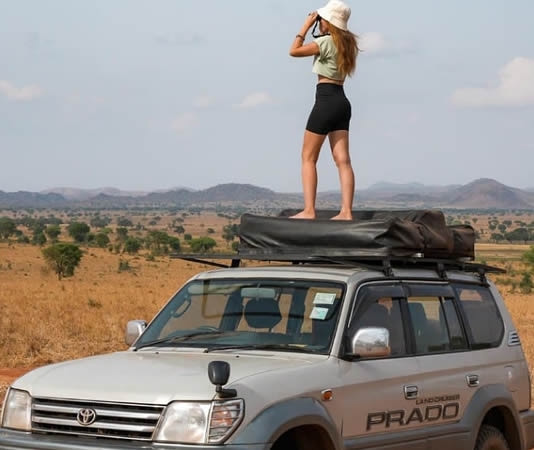
5-day self-drive itinerary through Tarangire and Lake Manyara, round-tripping from Arusha.
This route works well because the two parks sit close together (about 2.5–3 hours apart, and only 1.5–2 hours from Arusha), so you’re not spending your whole trip on the road.
Day 1: Arusha → Tarangire National Park (~2–2.5 hrs, 130 km)
Pick up your 4×4 rental in Arusha early (Toyota Land Cruiser or RAV4 with high clearance is standard for self-drivers here). Stock up on water, snacks, and cash/USD before you leave — there’s little in the way of shops once you’re in the bush. The drive south on the A104 is tarmac almost the whole way, so it’s an easy start.
Aim to reach Tarangire’s Sangaiwe or Boundary Hill gate by late morning so you can do an afternoon game drive on your way to camp. Tarangire is famous for its enormous elephant herds and ancient baobab trees, plus dense concentrations of wildlife along the Tarangire River, especially in the dry season (June–October). Check in to your lodge or campsite inside or just outside the park (Tarangire Safari Lodge, Sangaiwe Tented Lodge, or a public campsite like Tarangire Public Campsite if you’re camping) and enjoy a sunset drive back toward camp.
Day 2: Full Day in Tarangire National Park
This is your big game-viewing day, so give yourself the full day inside the park. Head out at first light — 6:30–7am — when animals are most active and the light is best. Tarangire’s road network loops through the river valley, swamps, and open plains, so you can build your own route: start along the Tarangire River circuit for elephants, then push toward the Silale Swamp area, which draws big cats, buffalo, and huge bird numbers in the wet season.
Pack a picnic lunch (there are designated picnic sites with rangers/askaris around, useful since walking outside vehicles isn’t allowed except at these spots) and take a slow midday break, since wildlife activity dips in the heat anyway. Resume driving in the late afternoon for another few hours before gates close (parks generally close to entry by 6pm, and you need to be out or at your in-park accommodation by then). Overnight again in or near Tarangire.
Day 3: Tarangire → Lake Manyara National Park (~1.5–2 hrs, 115 km)
Leave Tarangire in the morning, doing a final short game drive toward the exit gate. The drive to Lake Manyara is quick and mostly on tarmac (the A104 again), running along the base of the Rift Valley escarpment — a scenic stretch with views over the valley floor.
Check in early afternoon at a lodge near Mto wa Mbu (the small, lively town right at Manyara’s gate) or inside the park at a campsite. Lake Manyara is compact compared to Tarangire, but it packs in dense forest, groundwater forest, and the alkaline lake itself, plus its famous tree-climbing lions and large troops of baboons. Spend the afternoon doing a first drive through the groundwater forest and along the lake shore, where you’ll likely see hippos, flamingos (in season), and elephants moving through the forest.
Day 4: Full Day in Lake Manyara National Park (with option for Mto wa Mbu village/canoeing)
Manyara is small enough to cover thoroughly in a morning game drive, so structure your day around that plus a change of pace in the afternoon. Morning: drive the full network from the entrance gate down to the lake shore and the hot springs area at the park’s southern end, watching for tree-climbing lions in the acacia woodland, plus giraffe, buffalo, and large elephant herds that favor this park.
In the afternoon, since Manyara’s self-drive circuit is limited, consider:
- A cultural walking tour or bike tour through Mto wa Mbu village, known for its mix of over 120 tribal groups and local markets
- A canoeing trip on Lake Manyara (seasonal, water-level dependent) for close-up views of hippos and birdlife from the water
- Simply a relaxed second game drive if you’d rather stay in the park
Overnight again near Manyara or Mto wa Mbu.
Day 5: Lake Manyara → Arusha (~2 hrs, 125 km)
Take a final short game drive if your gate time allows, then start the return drive to Arusha along the same A104 route, this time with views of Lake Manyara and the escarpment behind you and Mount Meru ahead as you approach Arusha. It’s a comfortable half-day drive, leaving you time to return the rental car, do any last-minute shopping (Maasai markets, coffee, curios), and catch an onward flight or transfer in the afternoon/evening.
Practical Self-Drive Notes
- Vehicle: Rent a 4×4 with good ground clearance and a snorkel if possible; roads inside both parks are unpaved, dusty, and can be rutted or muddy in the wet season (November–May). Confirm your rental includes a spare tire, jack, and that TANAPA park fees can be paid by card or via a linked account — many gates now require cashless payment.
- Park fees: Non-resident adult entry to Tarangire and Lake Manyara currently runs roughly $50–59 per person per day depending on season, plus separate vehicle entry fees that scale with the car’s size, so budget an extra $20–50 per vehicle per park entry. Fees are reviewed annually by TANAPA, so confirm exact current rates before you go, ideally through your lodge or the park gate directly.
- Gate hours: Parks are typically open 6am–6pm; you must be inside your accommodation or have exited the park by closing time, so plan drives with a buffer.
- Fuel: Fill up in Arusha or Mto wa Mbu before entering either park — there are no fuel stations inside Tarangire or Manyara.
- Best season: June–October (dry season) gives the best game viewing as animals concentrate near water; November–May is greener, quieter, and better for birding, but some roads get slippery.
- Connectivity: Mobile signal is patchy to nonexistent inside both parks, so download offline maps (Maps.me or similar) before you leave Arusha.
- Safety: Stay in your vehicle except at designated picnic/rest areas, keep a safe distance from elephants (especially in Tarangire, where herds can be large and protective), and always carry extra water and a paper map as backup.
This gives you two full, unhurried days of game driving — one in each park — with comfortable, scenic drive times in between, and no long transfer days eating into your safari time.