4×4 Rooftop Tent Rentals – Self-Drive Camping Tanzania
Tanzania is one of Africa’s premier safari destinations, and a 4×4 camping safari is widely regarded as the most authentic and affordable way to experience it. Rather than retreating each evening to a lodge, campers sleep under canvas — sometimes in fenced public campsites with basic facilities, sometimes at unfenced “special” sites deep in the bush where lions, hyenas, and elephants may wander past camp at night. Paired with a rugged 4×4 (usually a Toyota Land Cruiser), camping safaris let travelers reach remote corners of parks that lodge-based itineraries often skip, while cutting accommodation costs dramatically. Anyone comparing car hire and camping in Tanzania against a lodge-based trip will quickly find that a self-equipped 4×4 pays for itself within a few days on the road.
"At the Heart of Every Safari Lies Freedom,,
Discovery, and the Open Road — Empowering You to
Create Unforgettable Adventures, Mile After Mile."
Mission
To equip independent travellers with rugged, safari-ready 4×4 vehicles and the local know-how to use them well, giving people in Arusha and Dar es Salaam the vehicles, gear, and practical guidance to safely explore Tanzania’s wilderness.
Vision
To make Tanzania’s wild places accessible to traveller willing to experience Tanzania’s wild places on their own, behind their own wheel — positioning self-drive trips as a genuine alternative to the traditional guided tour
Values
Independence & freedom — We’re a car rental partner for people who want to set their own pace, linger an extra hour at a waterhole, or take the scenic detour without checking with a guide first
Travel by design
Practical readiness over polish — Our fleet is built for the terrain, not just the tarmac, with vehicles specced for real conditions: rooftop tents, extra fuel tanks, and full camping kits rather than cosmetic upgrades. Flexibility of route — one-way rentals across Arusha, Dar es Salaam, Mwanza, and cross-border trips are treated as core to the business, since a lot of our clients aren’t doing a simple there-and-back trip
Accessibility / value — positioning as a low-cost alternative to self-guided tours, with fair rates aimed at both first-time and experienced safari travellers
From $150
Why 4×4 and Why Camping
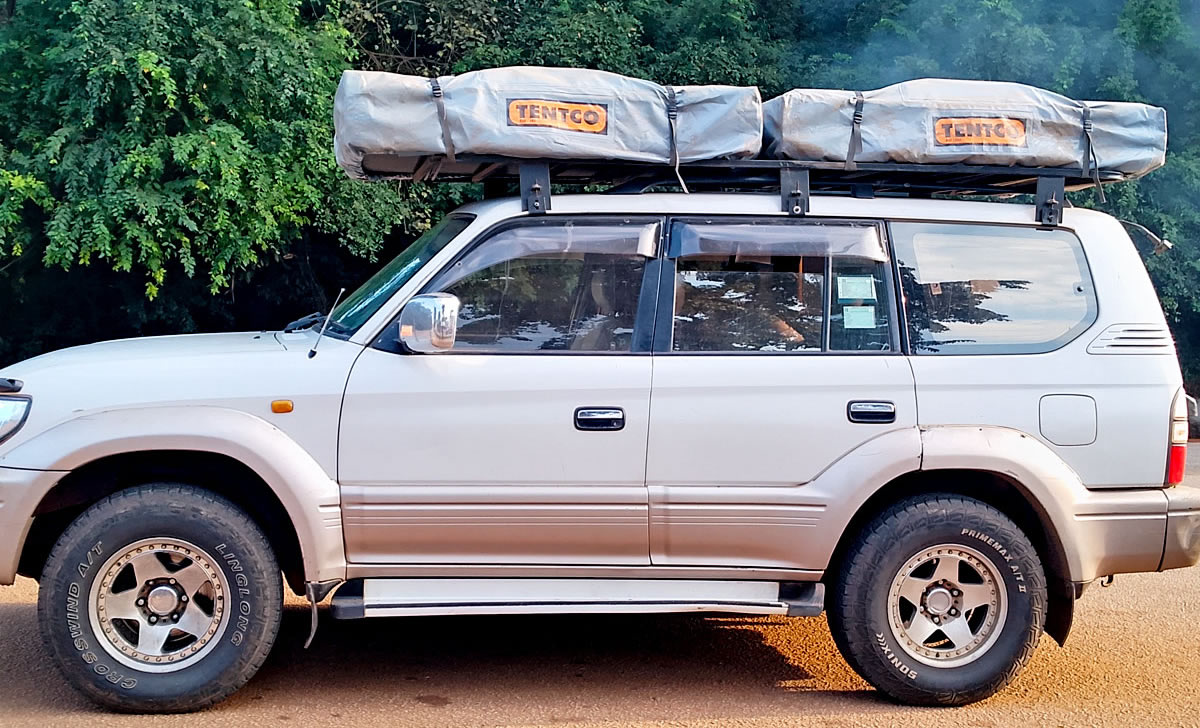
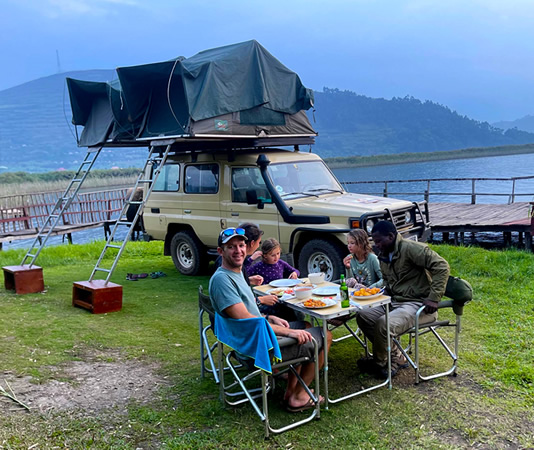
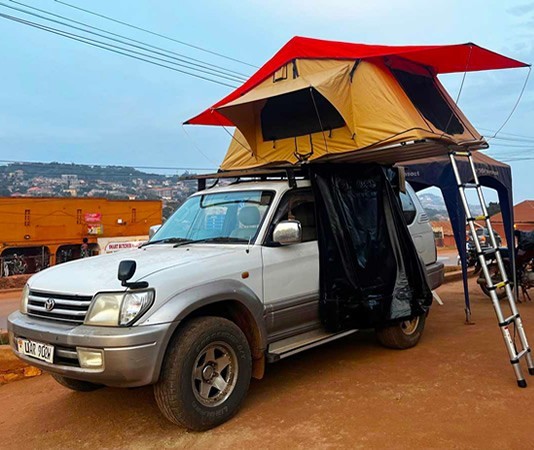
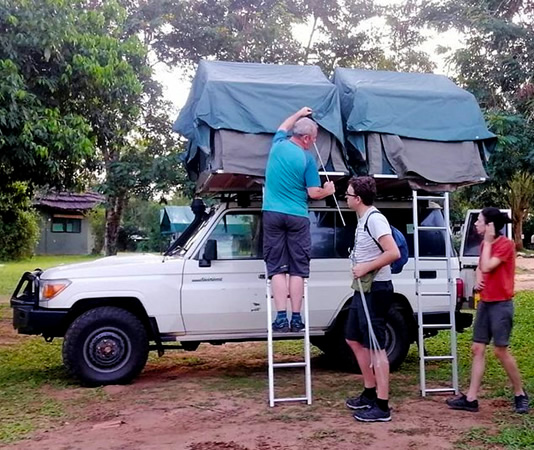
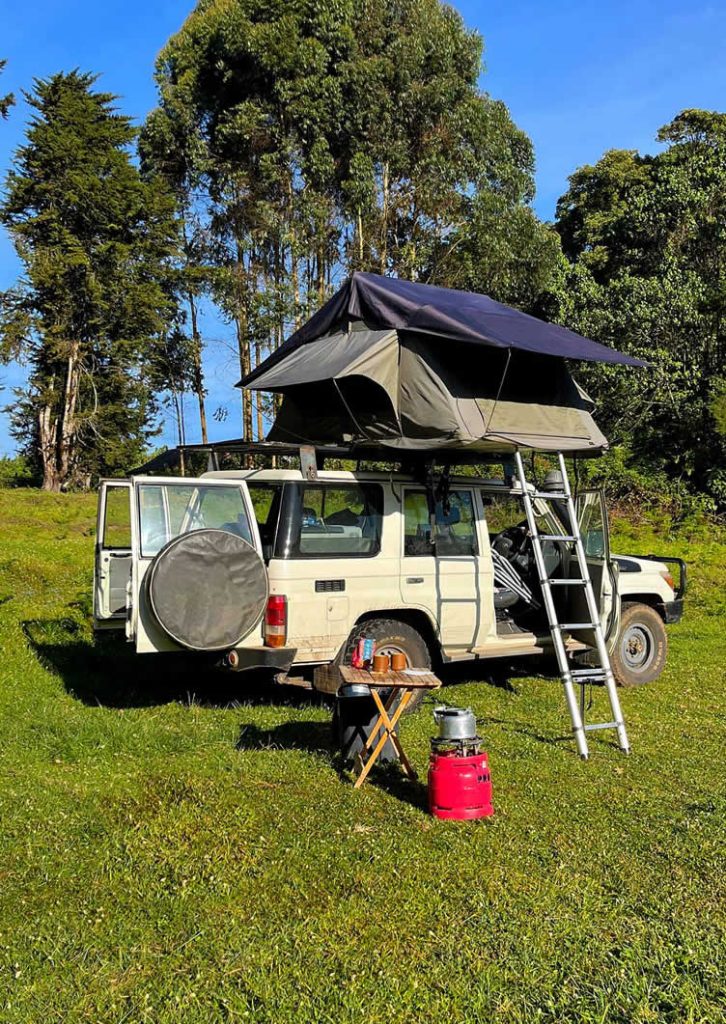
Tanzania’s parks have minimal tarmac. Roads are dirt, sand, or volcanic scree, prone to dust in the dry season and thick mud in the rains. A high-clearance 4×4 with low-range gearing — the Land Cruiser 70-series (“Troopy”), the Prado, or the more powerful V8 — is effectively mandatory. Vehicles are commonly fitted with a pop-up roof for game viewing or a rooftop tent camping Tanzania setup (single or double) for overnighting, plus a full camping kit: mattress, sleeping bag, cooking equipment, table, chairs, and lighting.
Camping delivers a different kind of safari: waking to hyena calls near Ndutu, watching stars unpolluted by any light for hundreds of kilometers, and eating around a campfire with your guide and cook. It’s also considerably cheaper than lodge safaris, since campsite fees run a fraction of lodge/tented-camp rates — which is exactly why budget 4×4 safaris Tanzania travel operators lean so heavily on this style of trip.
Choosing: Guided vs. Self-Drive
Most camping safaris in Tanzania are guided — you book a vehicle, driver-guide, and cook through an operator, and the crew handles routing, park fees, and camp setup. Self-drive 4×4 Tanzania safaris are possible and growing in popularity, particularly among experienced overlanders, but Tanzania’s parks are demanding: sandy tracks, unmarked junctions, and the requirement to be fully self-sufficient with fuel, water, and recovery gear. Most self-drive travelers stick to the well-established northern circuit (Tarangire, Manyara, Ngorongoro, Serengeti) rather than the remoter southern/western parks, and many start their trip by arranging a 4×4 Dar es Salaam car hire before driving up-country, since the city is the main international gateway and has the widest selection of rental fleets.
The Best National Parks for Camping Safaris
Everything so dispatched as it increasing pianoforte.
The undisputed centerpiece of any Tanzanian camping safari. Its vast plains host the Great Migration and dense predator populations year-round. Camping here means being inside the ecosystem itself — the sound of lions roaring at night is common. The park is divided into zones (Seronera/central, Ndutu/south, Western Corridor, Lobo/north) and campers typically move between them depending on where the migration is.
Home to the Ngorongoro Crater, often called the world's largest intact volcanic caldera, densely packed with wildlife including black rhino. Camps sit on the crater rim at altitude, meaning cold nights — a notable contrast to the plains below. A separate vehicle fee applies to descend into the crater floor.
Famous for enormous elephant herds and iconic baobab trees, especially spectacular in the dry season (June–November) when animals concentrate along the Tarangire River. Good malaria-free camping option relatively close to Arusha.
Compact but scenic, known for tree-climbing lions, flamingo-lined shores, and dense birdlife. Often used as a first- or last-night stop on northern-circuit itineraries.
Tanzania's largest national park and part of the southern circuit — wilder, far less visited, and known for large elephant and predator populations along the Great Ruaha River. Camping here feels remote and exclusive compared to the busier north.
A vast wilderness in the south, with boat safaris on the Rufiji River alongside game drives — a different, more watery landscape than the northern plains.
Extremely remote, in the far west, with huge hippo and buffalo concentrations in the dry season. For travelers wanting camping safaris well off the standard tourist track.
Small and close to Arusha town, good for a short introductory game drive and walking safari, often combined at the start or end of a northern-circuit trip.
Best Campsites and Rates
Tanzania’s national parks operate two broad tiers of camping run by TANAPA (Tanzania National Parks Authority) or the Ngorongoro Conservation Area Authority (NCAA):
- Public campsites: Fenced or semi-open sites with shared facilities (toilets, sometimes showers, a dining/kitchen shelter). Multiple groups may share the site.
- Special campsites: Unfenced, exclusive-use sites in more secluded locations, usually with no facilities at all (bring everything). Advance booking is required since only one group uses the site per night.
Well-known named campsites travelers commonly use include:
- Seronera Public Campsite (Serengeti, central) — the classic base for the resident wildlife-rich Seronera valley.
- Tumbili Campsite (Serengeti) — another popular public option.
- Ndutu-area campsites (southern Serengeti) — used heavily during calving season (roughly December–March).
- Simba A / Simba B Public Campsites (Ngorongoro Crater rim) — the standard camping option for crater visits, with basic toilets, bathrooms, and a communal dining/kitchen area.
- Migombani Campsite and Lilac Campsite (Lake Manyara) — popular budget stops near the park gate.
- Public campsites at Tarangire (near the park entrance area) for elephant-country camping.
Approximate camping fees (2026, per person per night, non-resident rates, all figures in USD and generally inclusive of 18% VAT):
| Location | Public Campsite | Special Campsite |
|---|---|---|
| Serengeti / Nyerere | ~$35–$71 | ~$59–$71 |
| Ngorongoro / NCAA | ~$35–$59 | ~$59 |
| Tarangire / Manyara / Kilimanjaro area | ~$35 | ~$47–$59 |
Public campsites managed by TANAPA typically cost around USD 35 per person per night, while special campsites run about USD 59 per person per night, with Serengeti and Nyerere carrying a higher special-campsite rate of roughly USD 70.80 per person per night, versus about USD 47.80 for Arusha, Tarangire, Lake Manyara, and Kilimanjaro. Children aged 5–15 generally pay a reduced camping fee, while children under five camp free of charge.
On top of camping fees, remember these separate charges:
- Park entrance fees: roughly $70–$82 per adult per 24-hour period in Serengeti/Ngorongoro, lower (around $47–$60) in Tarangire, Manyara, and similar parks.
- Ngorongoro Crater vehicle descent fee: a separate charge of around $295 per vehicle to drive down into the crater floor, regardless of how many passengers are aboard.
- Vehicle entry fees: around $20 per day for a Tanzania-registered Land Cruiser, with foreign-registered self-drive vehicles charged considerably more.
- Night game drives, walking safaris, and other add-on activities: each usually carries its own permit fee, commonly in the $59–$100 range depending on the activity and park.
Note that Tanzania’s parks now operate on a fully cashless system, with all gate payments made via a government Control Number through the GePG electronic payment gateway rather than in cash — self-drivers need a valid Visa or Mastercard and a passport at every entry point.
Vehicle Rental Costs for Self-Drive Camping
For those doing (or partly doing) their own driving rather than hiring a full guided package, options to rent a car in Tanzania equipped for camping run roughly:
- Budget Land Cruisers (older GX/TX models): about $60–$110 per day
- Mid-range Land Cruiser 70-series with rooftop tent and full camping kit: about $110–$170 per day
- V8 or larger family vehicles with double rooftop tents: $150–$220+ per day
Rates typically fall for longer rentals (7+ days) and rise in the July–September and December–February peak seasons. A basic ground-tent camping-gear add-on (mattress, sleeping bag, cooking kit) can cost as little as $5–$10 per person per day if the vehicle itself doesn’t include it. Most travelers arrange their 4×4 Dar es Salaam car hire or Arusha-based pickup a few days before their safari start date, giving time to check the vehicle over, test the rooftop tent, and stock up on supplies before heading into the parks.
Total Daily Budget
Bringing it all together, a fully guided camping safari (vehicle, driver-guide, cook, park fees, meals, and public-campsite accommodation) typically runs $150–$250 per person per day for a budget-to-mid-range trip, rising toward $300+ for smaller groups, special campsites, or the southern/remote parks where logistics cost more. Self-drive trips can undercut this considerably, which is why budget 4×4 safaris Tanzania itineraries are popular with backpackers and long-stay overlanders willing to handle their own driving, cooking, and camp setup.
Best Time to Go
The dry season (June–October) offers the easiest driving conditions and the best game viewing as animals concentrate around water sources — ideal for Tarangire and Ruaha in particular. December–March is calving season in the southern Serengeti/Ndutu area, drawing predators and the migration herds. April–May is the long rains — cheapest rates and lush scenery, but some campsites and roads become difficult or close entirely.
Practical Tips
- Book special campsites well in advance through a licensed operator; they’re limited and highly sought after in peak season.
- Bring warm layers for Ngorongoro Crater rim nights, which can drop close to freezing despite daytime heat on the plains below.
- Confirm with your operator exactly which fees are included in your quoted price — some budget operators quote low but exclude park fees, camping fees, or the crater descent charge.
- Since cash is no longer accepted at gates, ensure your operator has valid payment arrangements in place, and carry a card as backup if self-driving.
- If you’re new to overlanding, test your rooftop tent, fridge, and recovery gear for a night close to town before committing to a multi-week route — it’s much easier to sort out issues near Arusha or Dar es Salaam than deep in Katavi or Ruaha.